Succulentis Wiki
frithia pulcra
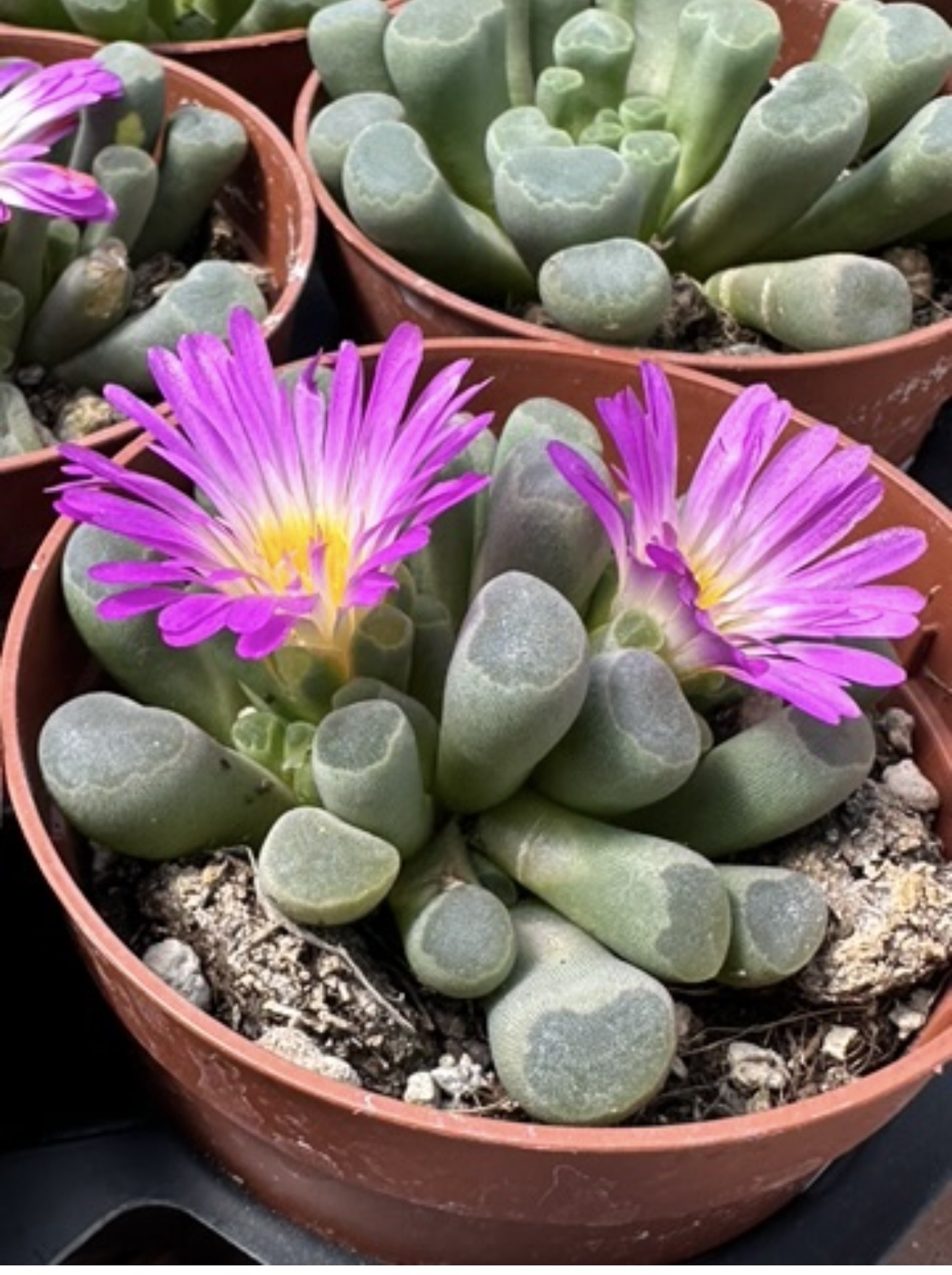
Frithia pulcra originates from the granite outcrops of eastern South Africa, inhabiting narrow rock crevices with thin sandy soils. It is a polycarpic succulent with partially subterranean leaves, an unusual trait within the genus Frithia, enhancing its survival in microhabitats with extreme conditions. Leaves cylindrical, 2-3 cm long, arranged in dense rosettes; epidermis translucent with longitudinal green stripes and reddish-brown hues in winter. Leaf tips protrude above the sand, bases remain buried.
