Succulentis Wiki
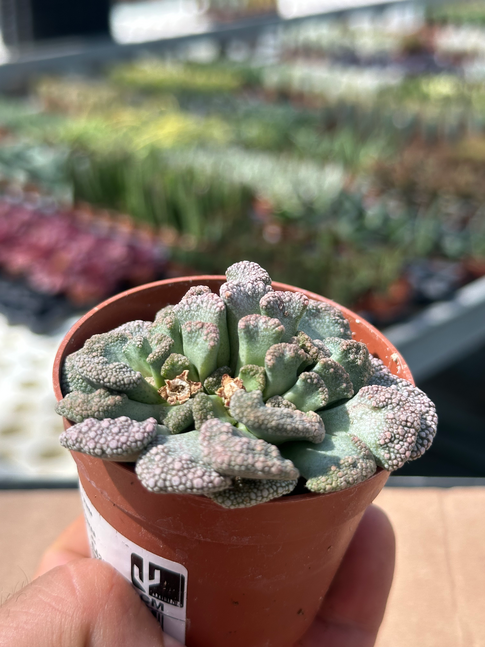
titanopsis calcarea
Titanopsis calcarea is native to the coastal areas of South Africa, thriving on calcareous and sedimentary rock substrates. It is a slow-growing, perennial succulent with a polycarpic lifecycle. Unique within its genus for calcified papillae on leaves, it effectively camouflages with its rocky habitat. Leaves are short, spatulate, 2-3 cm long, arranged in a compact rosette. Leaf surface covered with calcified papillae showing gray-green hues, shifting from olive green to pale gray seasonally.
